HINO TEAM SUGAWARA
Hino Team Sugawara is a joint team formed by Hino Motors and Japan Racing Management to race in the Dakar Rally.
Members
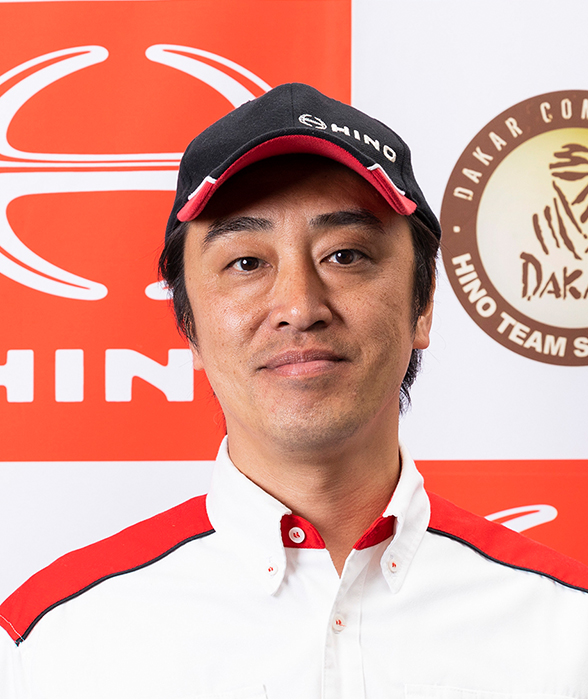
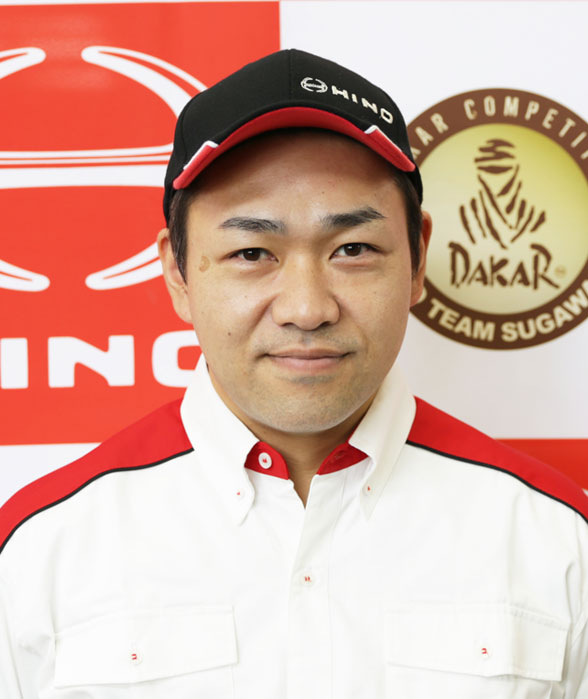
Teruhito Sugawara
Team Director and Driver
President, Japan Racing Management Co., Ltd.
Born Jul 13, 1972 Minato-ku, Tokyo
Teruhito Sugawara is the second son of Yoshimasa Sugawara, the “Iron Man of Dakar.” He first joined the Dakar Rally team as a mechanic in 1998, and began navigating for his father the following year. During the same period, he built up his experience in races including off-road races in Japan and Rally Mongolia before racing a HINO500 Series truck in the Pharaoh Rally (Egypt) in 2003, in which he finished with an overall championship in the Trucks category. Since 2005, he has been racing the Dakar Rally alongside his father as a father and son duo on two trucks, and won his first class championship in the Under 10-litre Class in 2007. In 2021, he won his twelfth consecutive championship in the class. His father Yoshimasa Sugawara announced his retirement from the Dakar Rally after 2019 event, and Teruhito Sugawara has taken up his position as team director.
-
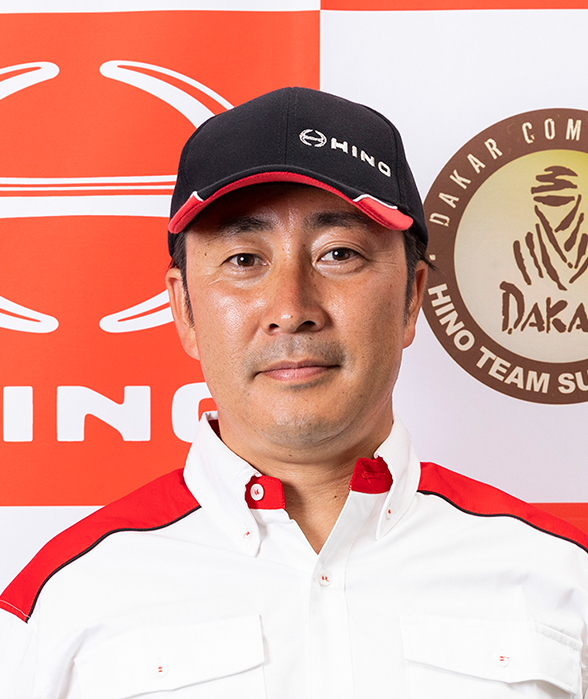
Hirokazu Somemiya
Navigator -
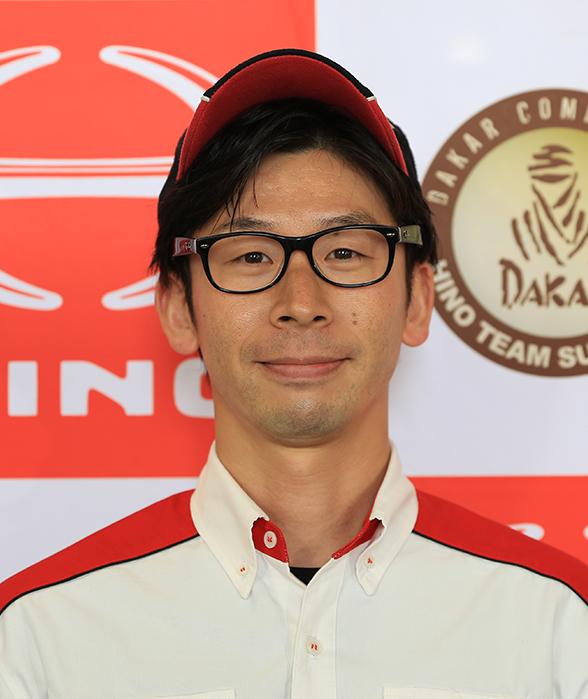
Yuji Mochizuki
Navigator -
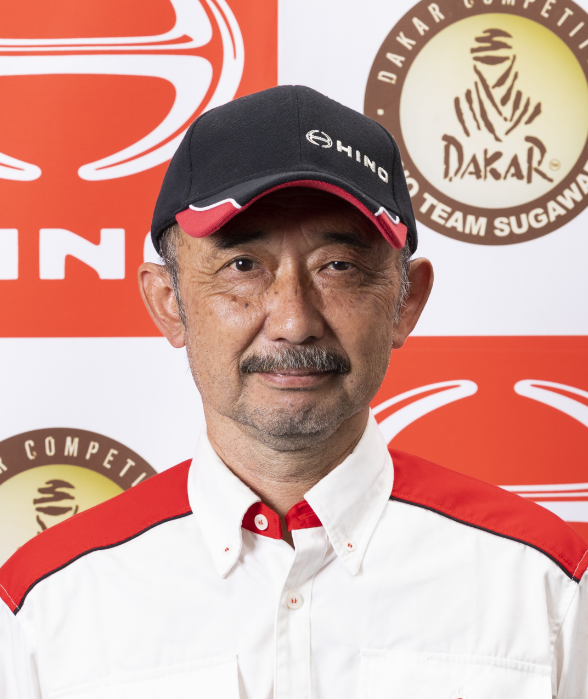
Seiichi Suzuki
Mechanic -
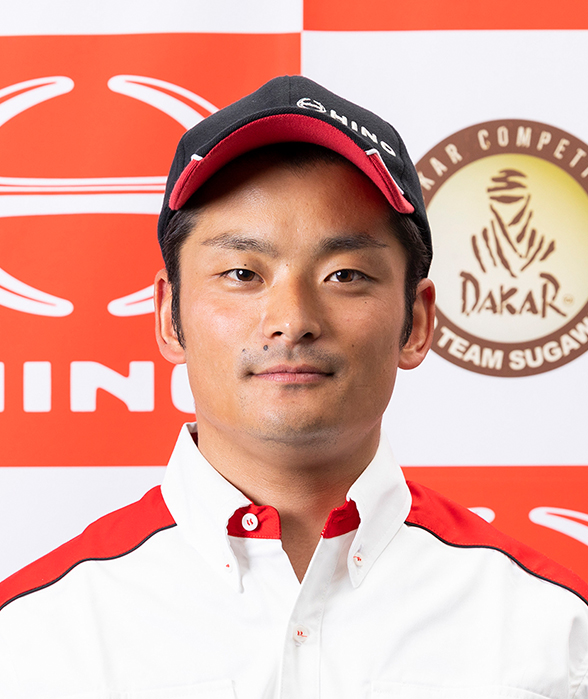
Koji Yoshikawa
Mechanic -

Masakazu Tazawa
Mechanic -

Hiroki Imagawa
Mechanic -

Takumi Kikuchi
Mechanic -
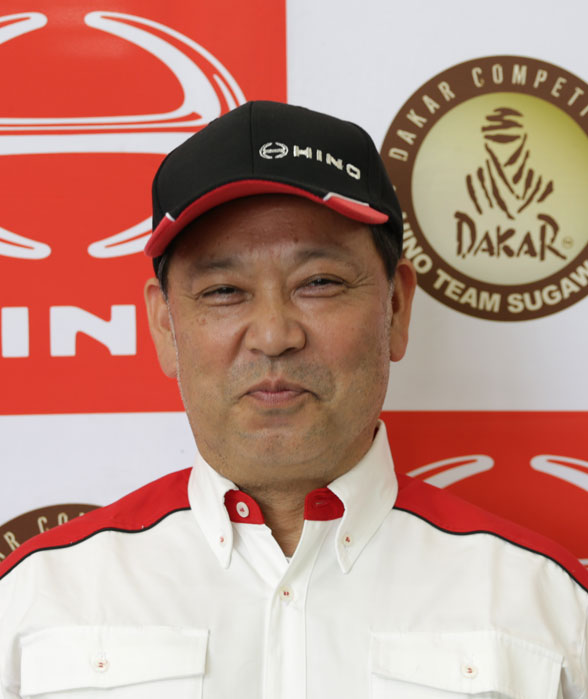
Takayuki Monma
Manager -
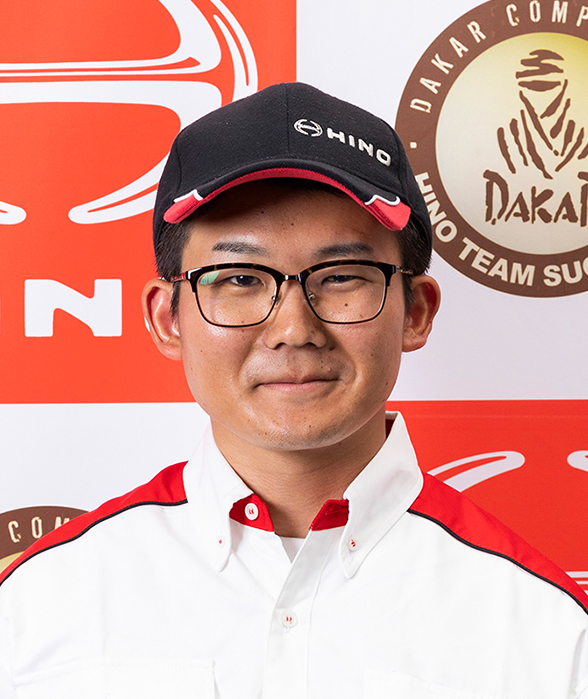
Shun Konnai
Mechanic -
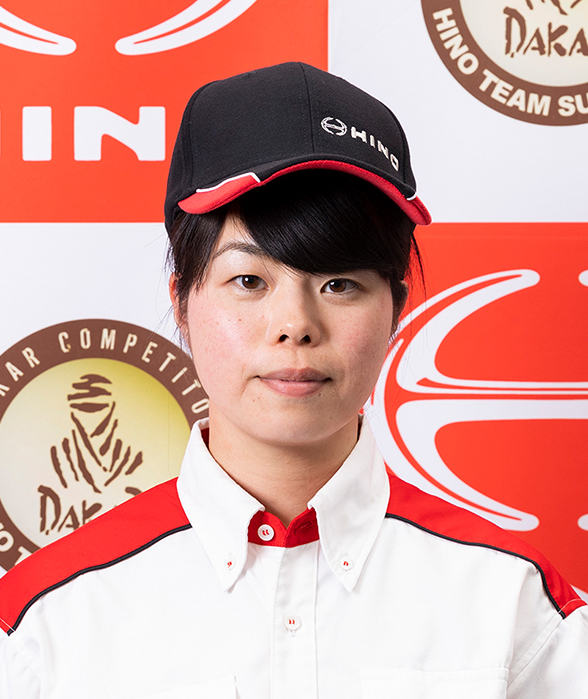
Rumi Ando
Support Member -

Ryoko Makita
Support Member
Racing Trucks
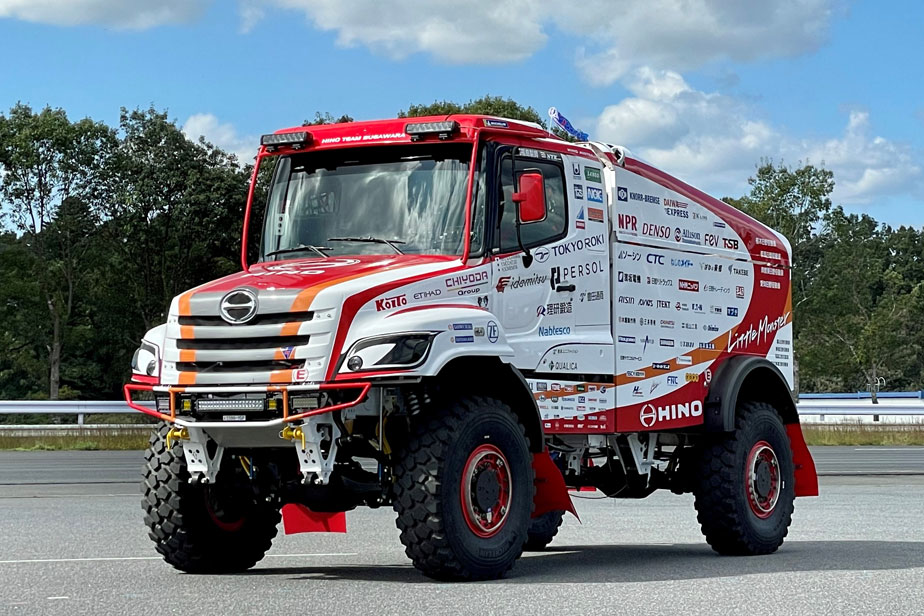
Hino Motors' Dakar Rally 2026 Racing Vehicle, Known as the "Little Monster“
Hino Motors' Dakar Rally racing vehicles are developed based on medium-duty trucks that support logistics around the world. In the Dakar Rally, medium-duty trucks excel in mobility, but do not have an absolute power advantage over large trucks. However, since their first entry, Hino Motors has consistently challenged with lightweight, highly maneuverable medium-duty trucks, and has been called "Little Monster" for their fierce battles against rival large trucks with bigger engine displacements.
For Dakar Rally 2026, based on the 2025 race vehicle (HINO 600 series), the color scheme has been completely renewed. The coloring theme designed by young designers represents rebirth, meaning "breaking out of the shell."
As measures against troubles from the previous race, improvements were made including torque rod reinforcement, final reduction ratio changes, and increasing the propeller shaft contraction range.
Additionally, suspension settings aimed at improving average speed were explored, and suspension tuning suited to recent Dakar Rally course configurations was implemented to aim for top finishes.
You can scroll horizontally
| Driver | TERUHITO SUGAWARA |
|---|---|
| Vehicle base model | HINO 600 Series |
| Engine | |
| Engine type | A09C-TI(With turbo intercooler) |
| Engine type | Diesel 4-cycle inline 6-cylinder |
| Engine displacement | 8.866L |
| Maximum engine output | 609kW (828ps) /2800rpm |
| Engine Maximum Torque | 2520Nm (257kgm )/1600rpm |
| Power train | |
| Driving method | Full-time 4WD |
| Transmission | AT |
| Transfer | Hi-LoWith range switching |
| Tires | X FORCE ZL 14.00R20 |
| Chassis | |
| Vehicle weight | 8,365 kg |
| over-all length | 6,620 mm |
| overall width | 2,500 mm |
| Overall height | 3,320 mm |
| Wheel base | 4,170 mm |
| Fuel tank | 800L |
Team Structure
A total of three mechanics selected from domestic sales companies will participate in the team.
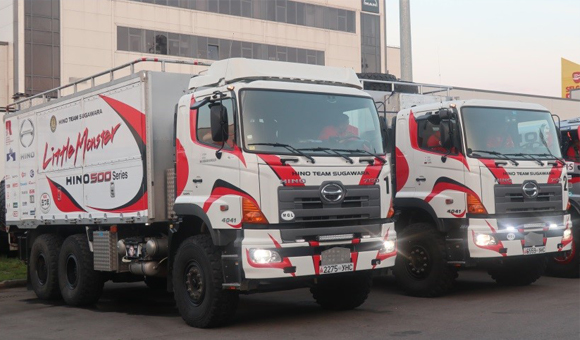
The race vehicle will operate with a single-unit system (HINO 600 series), and the support truck (vehicle type: ZS) will be operated as a full trailer with carefully selected cargo, towing a container house with headquarters functions. The team will compete with a setup including a camper where drivers will stay and a Land Cruiser (locally rented vehicle).